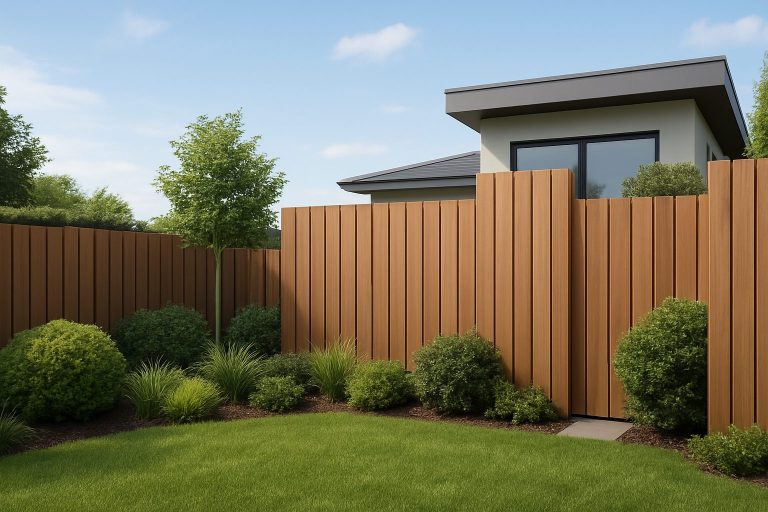
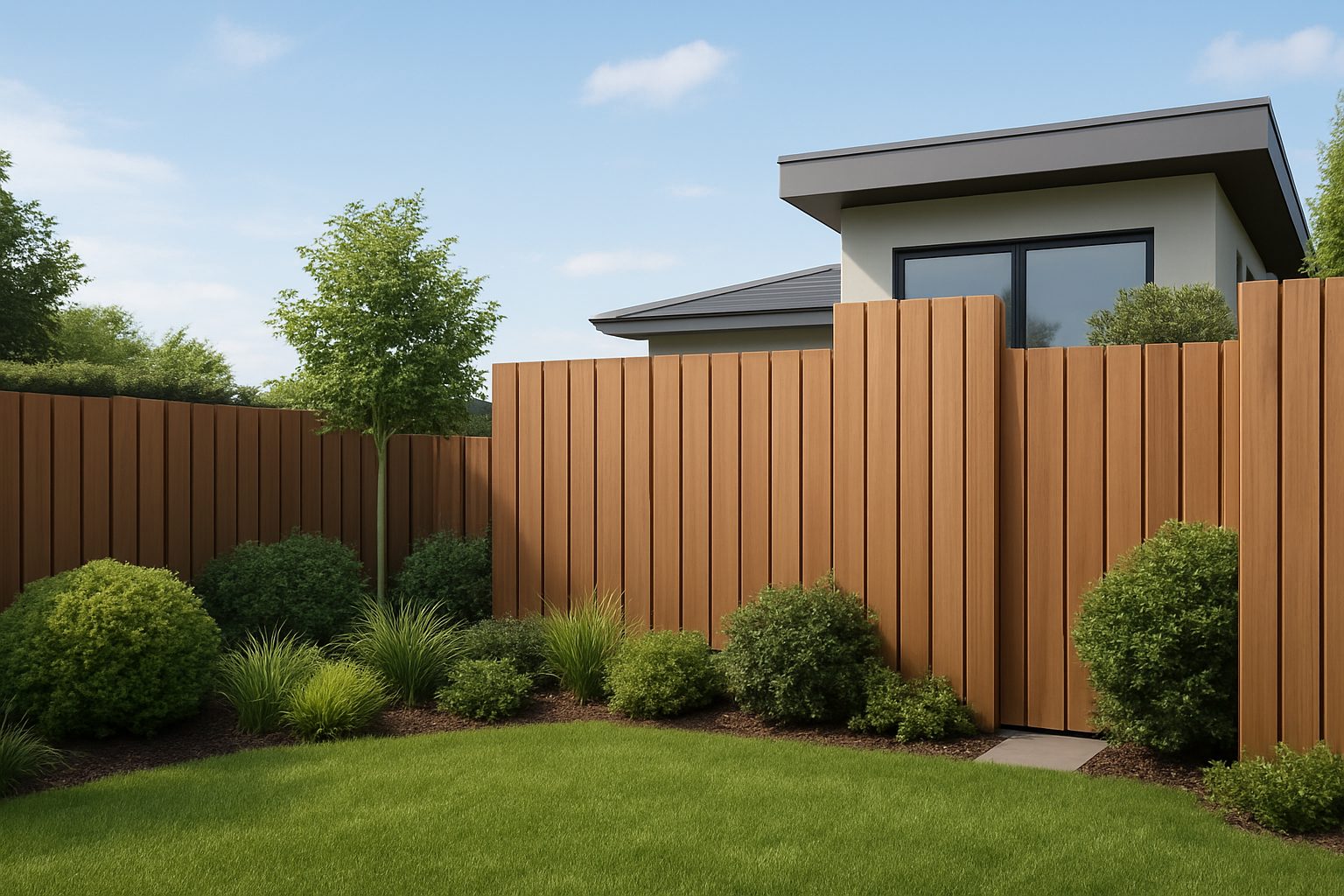
There is a curious thing happening in British gardens. We are putting up taller fences, closing off views and creating outdoor spaces that are almost completely hidden from the people next door. Privacy is a fair thing to want, especially in towns and cities where houses sit close together. But after years of working with garden fencing in York, I have started to question whether solid six-foot panels are always the best answer. Sometimes they solve one problem and create three others.
I have seen small gardens become noticeably darker after new fencing went up. I have seen perfectly pleasant courtyards turned into enclosed spaces that feel smaller than they did before. And I have visited homes where the owners spent good money replacing a perfectly sound boundary simply because they assumed taller fencing must be better.
It is not always better.
A good fence should provide the privacy and security a household needs without making the garden less enjoyable to use. That sounds obvious, but it is surprising how often the conversation begins and ends with one question: “Can we have six-foot panels all the way around?”
My answer is usually another question.
What are you actually trying to hide?
Privacy Has Become the Starting Point for Garden Design
Garden fencing used to be a fairly straightforward decision for many households. A boundary marked where one property ended and the next began. It kept children and pets contained, offered some shelter and gave the garden a tidy edge.
Privacy mattered, of course, but it was not always the overriding concern.
These days, the way people use their gardens has changed. Outdoor seating areas are treated almost like extra living rooms. Garden offices have become common. People spend money on hot tubs, outdoor kitchens, covered patios and spaces where they can work or relax without feeling watched.
At the same time, many newer homes have smaller gardens and closer neighbours.
Put those things together and it is easy to understand why taller fencing appeals.
Nobody particularly enjoys sitting outside while a neighbour’s upstairs window looks directly onto the patio. Equally, few people want every conversation in the garden to feel like a public performance.
The mistake is assuming a solid six-foot fence around the entire boundary will solve every privacy problem.
In some gardens, it will.
In others, it will simply block light while doing very little to stop the overlooking that bothered the homeowner in the first place.
A Six-Foot Fence Cannot Hide an Upstairs Window
This is one of the first things I explain when somebody wants taller fencing to stop overlooking.
A fence can block views at ground level. It is far less effective against somebody looking down from an upstairs bedroom.
The viewing angle matters.
Imagine a small garden behind a terraced house in York. The patio sits close to the back door, and the neighbouring property has a bedroom window overlooking it.
Installing a solid six-foot fence along the boundary might prevent people seeing through from the adjoining garden. But the person standing at the upstairs window may still have a clear view of the patio.
You have lost some sunlight and made the garden feel more enclosed without achieving the privacy you wanted.
In that situation, I would look at the position of the seating area before recommending taller fencing.
Could the patio be moved slightly?
Would a pergola provide better screening from above?
Could a carefully positioned tree or planting scheme interrupt the view?
Would a shorter section of taller fencing near the seating area work better than replacing the whole boundary?
Privacy is about sightlines, not simply fence height.
Once you understand where the unwanted view comes from, the solution often becomes much clearer.
Small York Gardens Can Feel Even Smaller
York has plenty of older properties with narrow rear gardens. Terraced houses around South Bank, Holgate, Bootham and other established residential areas often have outdoor spaces that are longer than they are wide.
Some are little more than enclosed courtyards.
These gardens can be lovely when they are planned well. Brick walls, traditional planting and modest fencing can create a sheltered space with plenty of character.
But install tall, solid panels on both sides and the proportions change.
The fence becomes the most noticeable feature in the garden.
Instead of seeing planting, neighbouring trees or a little open sky, your eye meets a continuous wall of timber.
I have seen homeowners respond to this by painting the fencing a darker colour, hoping it will disappear into the background. Sometimes that works, particularly with good planting. Other times it makes the space feel even more enclosed.
The issue is not always colour. It is the amount of solid material surrounding a relatively small area.
A combination of lower fencing, open screening and planting can often create a more comfortable space.
You still have a clear boundary, but the garden has room to breathe.
Sunlight Should Be Part of the Decision
This is something I wish more people considered before ordering fencing.
A tall fence casts a shadow. The length and position of that shadow change throughout the year.
In summer, when the sun is high, the effect may be fairly limited during the middle of the day. In autumn and winter, the lower sun can create much longer shadows.
The orientation of the garden makes a considerable difference.
A tall fence along the southern side of a garden in Britain can block valuable sunlight, especially during the colder months. Fencing on other boundaries may have a smaller effect, depending on the surrounding buildings and trees.
For a garden that already struggles with shade, this matters.
Lawns may become thinner in persistently shaded areas. Some plants will struggle. Damp surfaces can take longer to dry, and moss may become more noticeable.
I have visited gardens where the owners were planning to replace a low boundary with tall panels while also complaining that the lawn never received enough sun.
Those two decisions deserve to be considered together.
There is no point spending money on landscaping and planting if the new fencing makes the growing conditions worse.
Solid Fencing Also Changes How Wind Moves
People often assume taller, solid fencing provides better shelter.
Sometimes it does, particularly in a sheltered garden where the fence blocks a prevailing breeze.
But wind behaviour is not quite that simple.
A solid fence creates a barrier. Air moving towards it is forced over and around the structure, which can produce turbulence on the sheltered side.
It also places considerable pressure on the posts and foundations.
This becomes particularly relevant in exposed gardens around the outskirts of York, where properties may face open fields or have fewer buildings providing shelter.
A six-foot solid fence can take a substantial wind load during a storm.
If the posts are undersized, poorly installed or sitting in weak ground, that extra height becomes a liability.
Hit and miss fencing, some slatted designs and other partially open systems can allow air to pass through, reducing the pressure compared with a fully solid panel.
That does not mean every exposed garden should have gaps in the fence. Privacy, security and the direction of the wind all matter.
But it does mean the strongest-looking fence is not always the most suitable design.
A good fencing contractor should consider exposure before recommending a particular height and style.
Slatted Fencing Looks Good, but It Has Limitations
Modern slatted fencing has become a popular choice for contemporary gardens.
I can see why.
Horizontal lines give a clean appearance, and the gaps between boards can make a boundary feel lighter than traditional solid panels.
In the right setting, it works extremely well.
But slatted fencing is not automatically private.
The amount you can see through it depends on the spacing, board dimensions and viewing angle. A fence that looks fairly private when viewed straight on may reveal much more from the side.
This is particularly noticeable where neighbouring gardens sit at different levels.
I would always encourage homeowners to look at a real example before choosing a slatted system purely from photographs.
Think about where people will be sitting and standing.
Consider the view from the neighbouring property.
Look at the gaps from different angles.
There are designs that use overlapping boards to improve privacy while retaining some of the visual benefits of slatted fencing.
These can be a useful compromise, although they may cost more than basic panels.
The important thing is choosing the design for how it performs in your garden, not just how it looks in a photograph.
Do We Really Need the Same Fence Height Everywhere?
This is where I think garden design could be much more imaginative.
There is no rule saying every section of a garden boundary must look identical.
In fact, using different heights can produce a much better result.
A seating area may need substantial privacy screening. A vegetable garden probably does not.
A boundary beside a public footpath might need taller fencing than one overlooking open countryside.
A small front garden may look better with a low picket fence or railings.
Yet many homeowners choose a single panel style and install it around every available boundary.
It is simple, but not always sensible.
I have seen gardens where a short section of taller fencing near the patio provided all the privacy required. The remaining boundary could then be lower, allowing more sunlight and a better view.
There is also the option of combining timber fencing with trellis or planting, provided the structure is suitable and local planning rules allow it.
A varied boundary can look intentional and attractive when the materials and proportions are chosen carefully.
It need not resemble a collection of mismatched repairs.
Planting Can Provide Privacy Without Building a Wall
I am a fencing contractor, so it might sound strange to suggest planting instead of more fencing.
But sometimes that is the better answer.
A well-positioned shrub, hedge or small tree can interrupt a sightline without creating a continuous solid barrier.
Planting also softens the appearance of fencing and helps a garden feel less enclosed.
The difficulty is choosing the right plants and allowing for their mature size.
I have seen fast-growing hedges planted too close to fences, eventually becoming so large that they push against panels or make maintenance impossible.
Climbing plants can cause similar problems.
Ivy, in particular, can become heavy and trap moisture against timber. It may look attractive, but it needs managing.
For screening, I would favour plants that suit the available space and can be maintained without constant cutting back.
Evergreen planting offers year-round cover, while deciduous species may allow more light through during winter.
That seasonal difference can be useful.
A garden that feels private in summer does not always need the same level of screening in December, when people spend less time sitting outside.
What About Privacy From Neighbours?
There is another side to this conversation that rarely gets discussed.
Not every neighbour wants to look at a six-foot wall of fencing.
If the adjoining garden is small, a new tall boundary can remove a significant amount of light.
That does not mean homeowners should abandon their own privacy needs. It simply means the effect on neighbouring properties deserves some thought.
I have seen perfectly friendly neighbours fall out over fencing that could have been discussed beforehand.
Sometimes the dispute is about ownership.
Sometimes it is about height.
Occasionally, it is simply because one household suddenly finds its garden much darker.
In England, fences and walls are subject to planning rules. In many ordinary situations, the permitted height is up to two metres, or one metre where the boundary is next to a highway used by vehicles, although the precise rules and any restrictions need checking.
Listed buildings, conservation areas and planning conditions can introduce additional requirements.
York has a significant number of historic properties, so it is particularly sensible to check before making substantial changes.
A quick conversation with the neighbour can also prevent unnecessary friction.
You do not necessarily need their agreement for every fence, but understanding their concerns before work begins is rarely a bad idea.
Wildlife Needs Somewhere to Go
Completely enclosed gardens can also create problems for wildlife.
Hedgehogs are a good example.
They travel between gardens in search of food, shelter and suitable nesting areas. Solid fencing that reaches the ground without gaps can prevent them moving through an area they previously used.
A small opening at the base of a suitable boundary can help.
A gap around 13cm square is commonly used for hedgehog access, although its position needs to be safe and appropriate.
Of course, this will not suit every garden.
If you have a small dog that could escape, an opening may be impractical. The same applies where the boundary has a particular security purpose.
But it is worth considering during a new installation.
A simple design decision can allow wildlife to move between gardens without compromising the main purpose of the fence.
Gardens do not exist in isolation. Together, they form useful green routes through towns and cities.
In places such as York, where older residential areas contain mature gardens and established trees, keeping those routes open can be valuable.
Security Is Not Always About Height
Another common assumption is that taller fencing automatically makes a property more secure.
Height can help, but security involves several factors.
A tall rear fence with a weak side gate may provide very little additional protection.
Poor locks, loose hinges and badly supported gate posts can create easier access points than the fence itself.
Visibility also matters.
In some situations, completely hiding a garden from public view can give an intruder greater privacy once they are inside.
That does not mean low fencing is always safer. It means security should be considered as a whole.
For domestic properties, I would look at the strength of the boundary, gate construction, locking arrangements and how the garden connects to neighbouring spaces.
For commercial properties, the requirements can be very different. Purpose-designed security fencing may be needed to control access, protect equipment or secure a site.
A family garden and a commercial storage yard should not be treated as though they need the same solution.
The right design depends on what you are trying to protect.
The Cost of Building Higher Than Necessary
Taller fencing generally uses more material and requires suitable structural support.
That affects cost.
A higher fence may need longer posts, stronger rails, more substantial foundations and additional labour.
If the garden is exposed, those requirements become even more important.
Decorative panels and modern screening systems can add further expense.
There is also the cost of maintenance.
A larger timber surface takes longer to clean, paint or treat. Taller sections can be more awkward to reach, particularly where access is restricted.
None of these costs should prevent somebody choosing a tall fence if they genuinely need one.
But they are good reasons not to install extra height without thinking about its purpose.
If a four-foot boundary with targeted screening provides the privacy you need, why pay for six-foot panels everywhere?
Sometimes the money would be better spent on stronger posts, better-quality timber or a properly fitted gate.
A Good Garden Needs Different Spaces
One of the more interesting changes in garden design is the move towards creating separate areas for different activities.
A patio for eating.
A quiet corner for reading.
A play area for children.
Space for growing vegetables.
Perhaps a garden office or workshop.
These areas do not all need the same level of privacy.
A seating area close to the house may benefit from screening, while the rest of the garden can remain more open.
I particularly like designs where fencing helps define spaces without dominating them.
A short run of slatted screening beside a patio can feel much more natural than enclosing the entire garden with tall panels.
Similarly, a lower boundary overlooking established trees can make a garden feel larger because the view extends beyond the property.
You do not need to own the scenery to enjoy looking at it.
This is something worth remembering in York’s outer villages and residential areas where gardens may overlook mature trees, green spaces or open land.
Blocking those views with solid fencing can remove one of the property’s nicest features.
Sometimes a Six-Foot Fence Is Exactly Right
I should make something clear.
There are plenty of situations where solid six-foot fencing is the sensible choice.
A garden beside a busy public path may need privacy.
A household with dogs may need a secure boundary.
An overlooked patio might benefit from a taller screen.
A property with an unattractive neighbouring structure may look better with a solid fence.
And some people simply prefer a more enclosed garden.
That is their choice.
My argument is not against tall fencing. It is against installing it automatically without considering the consequences.
I have fitted plenty of solid closeboard fences that were exactly right for the property.
The difference is that the height and design served a clear purpose.
They were not chosen simply because six-foot panels happened to be the standard option.
What I Ask Before Recommending a Fence Height
When discussing a new garden boundary, I prefer to understand how the space is used before talking about materials.
Where do you sit?
Which windows overlook the garden?
Do you have children or pets?
Does the garden receive much sunlight?
Is the boundary exposed to strong winds?
Are there views you want to keep?
Will the fence need regular access for maintenance?
These questions usually reveal more than asking somebody whether they want four-foot or six-foot panels.
I would also look at the neighbouring properties and any changes in ground level.
A six-foot fence measured from one garden can appear much taller or shorter from the other side if the ground levels differ.
That can affect both privacy and appearance.
Once those details are clear, choosing the right fencing becomes much easier.
The Best Fence Is Not Always the Tallest One
I suspect we will continue seeing demand for taller garden fencing. Privacy matters, and many modern homes have outdoor spaces that are closely overlooked.
But I would like to see more homeowners question whether enclosing every boundary is genuinely necessary.
A garden should feel comfortable, not confined.
It should receive enough light for the way it is used. It should offer shelter without creating unnecessary wind problems. It should provide privacy where people need it while allowing the rest of the space to feel open.
Sometimes that means solid six-foot fencing.
Sometimes it means a lower fence, a section of screening and a few carefully chosen plants.
And sometimes the best decision is to leave an existing boundary exactly as it is.
I remember looking at a small garden where the homeowner wanted every fence raised to six feet. The garden was already quite shaded, with a mature tree beyond the rear boundary. From the patio, you could see the tree’s canopy and a good stretch of sky.
Raising the rear fence would have hidden much of that view without doing anything useful for privacy.
I suggested keeping the rear boundary lower and concentrating the screening around the seating area instead.
That is the sort of decision I wish more people would consider.
There is nothing wrong with wanting your garden to feel private. But if achieving that means losing the sunlight, the views and the sense of space that made you enjoy it in the first place, it might be worth asking whether the fence is solving the right problem.
What You Need to Know
- British homeowners are increasingly opting for taller fences to enhance privacy in gardens, especially in urban areas with closer neighbors.
- Solid six-foot fencing can lead to darker garden spaces and create a sense of enclosure, rather than improving the overall enjoyment of the garden.
- Taller fences often fail to block views from upstairs windows, highlighting that privacy is more about sightlines than just fence height.
- The proportions of small gardens can change dramatically with tall fencing, making solid panels the most prominent feature rather than garden elements like plants or trees.
- A tall fence can cast significant shadows, especially during autumn and winter, potentially harming sunlight access for plants and lawns in a garden.
About the Author